2026 Top Self Priming Pump Trends for Global Buyers?
The global market for Self Priming Pumps is evolving rapidly. As efficiency and reliability become critical, buyers are seeking the latest innovations. This trend highlights the importance of robust designs and user-friendly features. Manufacturers are stepping up to meet these demands, yet challenges remain.
In 2026, consumers will look for pumps that not only perform well but also offer sustainable options. The focus on energy efficiency and materials will shape purchasing decisions. In this competitive landscape, companies must address common issues. Problems such as noise levels and maintenance times can affect buyer choices.
Additionally, integrating smart technology into Self Priming Pumps holds potential. However, many products still lack user-friendly interfaces. The journey to better pumps is ongoing. Manufacturers must prioritize consumer feedback to enhance their offerings. Ultimately, the success of a Self Priming Pump hinges on balancing performance with practicality.

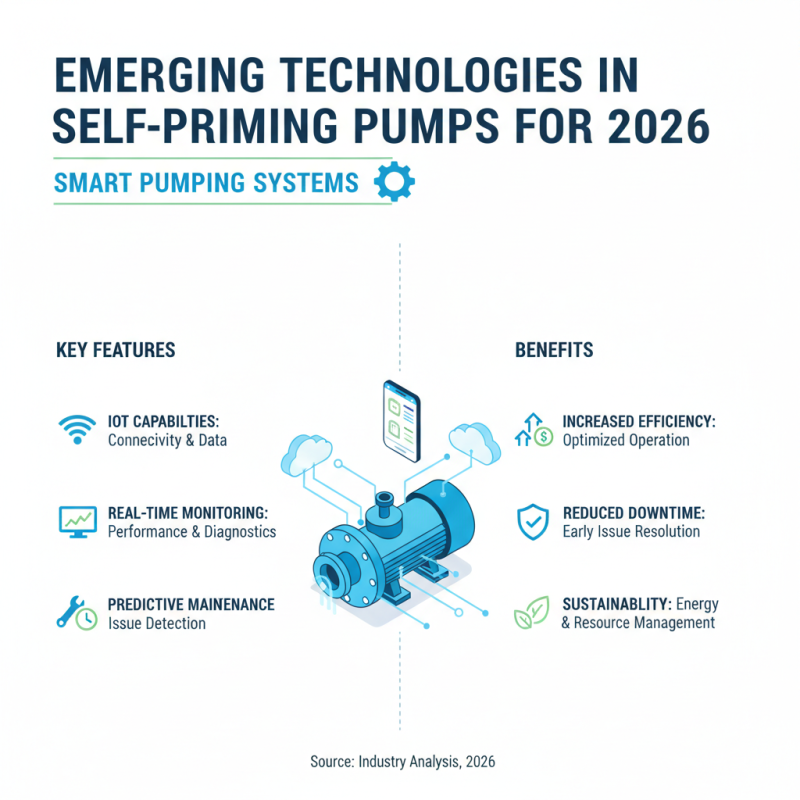
Emerging Technologies in Self-Priming Pumps for 2026
The self-priming pump industry is witnessing notable advancements. Emerging technologies are reshaping operational efficiency and sustainability for these pumps. One significant trend is the development of smart pumping systems. These systems integrate IoT capabilities, allowing for real-time monitoring of performance and maintenance needs. Users can track efficiency levels and detect issues early, reducing downtime.
Another area of innovation is in materials used for self-priming pumps. Engineers are exploring lightweight, durable composites that can withstand harsh environments. These materials enhance the pump's lifespan and performance. Additionally, energy-efficient designs are gaining traction. Reducing energy consumption is essential for long-term cost savings and environmental impact.
However, not all changes are seamless. The introduction of new technologies often comes with a learning curve. Operators may face difficulties adapting to smart systems. There’s also the challenge of ensuring compatibility with existing infrastructures. Continuous training and support will be necessary to navigate these advancements effectively. The evolution of self-priming pumps is exciting but requires cautious implementation.
Key Features and Innovations in Self-Priming Pumps
Self-priming pumps are gaining traction among global buyers due to their efficiency and innovative features. According to a recent market research report, the self-priming pump market is expected to grow at a CAGR of approximately 6.8% from 2022 to 2028. This growth underscores the increasing demand for pumps that can handle challenging liquids without the need for manual priming.
One notable innovation involves the incorporation of advanced materials. Modern self-priming pumps now use corrosion-resistant alloys and high-performance plastics. These materials enhance durability and reduce maintenance needs. Furthermore, new designs are optimizing hydrodynamics, leading to improved energy efficiency. Some pumps boast a reduction in energy consumption by up to 20%, which is crucial for industries focusing on sustainability.
However, it’s important to recognize potential shortcomings. Not all self-priming pumps are suitable for every application. Their performance can significantly vary based on liquid viscosity and temperature. Buyers must carefully assess their operational requirements before making a purchase. A mismatch could lead to inefficiencies that offset the intended benefits. Therefore, thorough research and consultation with industry experts are advisable before investment.
2026 Top Self Priming Pump Trends for Global Buyers
| Feature |
Description |
Innovation |
Market Trend |
| Energy Efficiency |
Enhanced designs that reduce energy consumption. |
Integration of smart technology for monitoring efficiency. |
Increasing demand for sustainable solutions in industries. |
| Corrosion Resistance |
Materials that withstand harsh environments and fluids. |
Use of advanced coatings and composite materials. |
Shifts towards durability in chemical processing applications. |
| Compact Design |
Space-saving designs suitable for limited installations. |
Modular configurations for versatility and easy upgrades. |
Growing trend towards industrial equipment minimization. |
| Smart Features |
Remote monitoring and control capabilities. |
IoT integration for predictive maintenance and analytics. |
Rising adoption of Industry 4.0 practices. |
| Noise Reduction |
Technologies to minimize operational noise levels. |
Innovative motor designs for quieter performance. |
Increased focus on workplace comfort and regulations. |
Market Analysis: Demand Trends for Self-Priming Pumps Worldwide
The demand for self-priming pumps is on the rise, particularly in sectors like agriculture, wastewater management, and industrial applications. According to a recent market report by Research and Markets, the global market for self-priming pumps is expected to reach USD 12.2 billion by 2026. This growth can be attributed to the increasing need for efficient fluid transfer and the versatility of these pumps in handling liquids with varying levels of viscosity.
In regions like Asia-Pacific, particularly India and China, industrial growth is a driving factor. These countries have seen expanded agricultural activities, which significantly boost the need for reliable self-priming pumps. Moreover, the environmental regulations in Western markets push industries to adopt more sustainable and efficient pumping solutions. However, challenges like fluctuating raw material prices could affect pricing strategies, ultimately impacting demand.
Data from industry analysts also indicate that these pumps often require regular maintenance to ensure optimal performance. Overall, while the market shows promise, companies must navigate operational complexities and engineer advancements to stay competitive. Balancing efficiency with affordability remains a critical task for manufacturers seeking to capture market share.
Top Manufacturers Leading the Self-Priming Pump Industry
The self-priming pump market is evolving rapidly. As global demand for efficient resource management increases, top manufacturers are stepping up innovation. They focus on developing pumps that can operate in diverse conditions. This adaptability is crucial for industries like agriculture and wastewater treatment.
The emphasis is on creating products that not only meet current needs but also anticipate future challenges.
Manufacturers are integrating advanced technology into pump designs. These innovations enhance efficiency and reduce energy consumption. Companies are also prioritizing user-friendly features. For instance,
streamlined maintenance processes simplify operations for end-users. However, the industry faces challenges, such as
fluctuating raw material prices affecting production costs. Constant feedback from users can help guide future improvements.
Understanding market trends is essential. Buyers are more informed than ever, seeking
high-quality performance and reliability. There is an increasing focus on sustainability and environmental impact. Brands must adapt to these demands while maintaining product integrity. This balancing act requires careful consideration and continuous development. The evolving landscape invites both opportunity and reflection for manufacturers and buyers alike.
Sustainability Practices Impacting Self-Priming Pump Design in 2026
In 2026, self-priming pump design will be heavily influenced by sustainability practices. As environmental concerns rise, manufacturers are pushing for more eco-friendly products. This trend emphasizes the use of renewable materials and energy-efficient technologies. Buyers increasingly prefer pumps that reduce carbon footprints. They want equipment that not only performs well but also aligns with their sustainability goals.
The design of self-priming pumps will incorporate features that enhance efficiency. For example, integrating smart technologies can optimize performance in various conditions. These pumps may use less water without sacrificing flow rates. However, striking the right balance between efficiency and reliability remains a challenge. Some manufacturers still struggle to provide sustainable solutions without compromising quality.
Water scarcity is another critical factor pushing these trends. It encourages the adoption of self-priming pumps designed for lower water usage. Innovators are exploring alternative materials that can withstand harsh conditions. While the progress is promising, there are hurdles to overcome. Developing truly sustainable pumps requires continuous refinement and testing. Buyers will need to remain vigilant in discerning which innovations genuinely impact sustainability.
The chart above illustrates the top self-priming pump trends anticipated for global buyers in 2026, highlighting the importance of energy efficiency and sustainable materials. The data reflects the growing significance of these factors in pump design influenced by sustainability practices.