Choosing the top Dewatering Pump suppliers worldwide requires more than comparing brand recognition or catalog prices. Pump performance depends on site conditions, water quality, elevation, solids content, and operating hours. A supplier serving a deep construction excavation may not suit a mining operation with abrasive slurry.
This guide examines established manufacturers, regional specialists, and dependable rental providers across major markets. It considers pump capacity, total head, energy use, wear resistance, automation, spare parts, and technical support. Practical experience matters here. A pump that starts reliably at a flooded site can protect schedules, equipment, and worker safety. Supplier references, field service coverage, warranty terms, and documented testing also reveal how companies perform beyond sales presentations.
There is no universal winner. An electric pump may reduce emissions indoors, while a diesel model can offer flexibility in remote areas. Some suppliers publish impressive flow rates but provide limited information about lifecycle costs or muddy-water performance. That gap deserves attention. This comparison therefore focuses on evidence, including product specifications, customer feedback, service networks, and application history. It also recognizes an uncomfortable limitation: supplier data is not always presented consistently across countries. Readers should verify local availability, installation requirements, certifications, and maintenance support before making a purchase. The strongest choice is not always the largest brand. It is the supplier that matches real site demands with reliable equipment and responsive expertise. Performance comes first.
Dewatering pumps are engineered systems that remove unwanted water from excavations, tunnels, mines, and other work areas. They keep working surfaces stable and help crews operate safely. A typical system includes a pump, suction hose, discharge pipe, strainer, and power source.
Most models use centrifugal action to move water quickly. Submersible pumps work underwater and suit deep pits or flooded basements. Positive displacement pumps can handle thicker fluids, although they often move water more slowly.
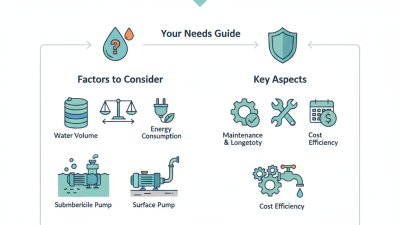
The correct choice depends on flow rate, discharge head, water depth, and the amount of sand or gravel present. Small details matter. A blocked strainer can stop an otherwise powerful pump.
On construction sites, dewatering pumps lower groundwater around foundations and prevent muddy trench walls from collapsing. In mining operations, they transfer seepage from sumps and underground passages. Tunneling projects use them to control continuous inflow. Emergency teams may also use portable units after heavy rainfall, though temporary setups need careful hose routing and electrical protection.
Experience shows that suppliers should provide clear performance curves, solids-handling data, spare parts, and responsive technical support. Fuel use and noise deserve attention too. A pump may meet its advertised flow in clean water, but real sites are rarely so kind. Site testing remains necessary, and that part is sometimes underestimated.
Evaluating global dewatering pump suppliers requires more than comparing flow rates. Start with verified performance data, including head, capacity, solids handling, and efficiency under variable loads. ISO 9906 testing can help confirm hydraulic performance, although field conditions rarely match laboratory results. A supplier with mining, construction, or flood-control experience should provide site references, maintenance records, and failure histories. That evidence matters.
Energy use deserves serious attention. The UN World Water Development Report 2024 states that agriculture accounts for roughly 70% of global freshwater withdrawals. This increases pressure to reduce pumping waste, especially where drainage systems operate for months. Compare motor efficiency, fuel consumption, automatic controls, and expected service intervals. Ask for total cost of ownership, not only the purchase price. Small savings can become significant.
Service capability separates reliable suppliers from capable manufacturers. Check local spare-parts inventories, technician response times, remote monitoring, and training arrangements. Request independent test certificates and clear warranty exclusions. Vague promises are a warning. Global supply chains may also create delays, even when the equipment is excellent. I would score delivery resilience separately. A perfect supplier score is unrealistic, and report figures can conflict because market studies use different definitions. Still, transparent assumptions, documented project experience, and honest limits provide stronger evidence than polished brochures. Industry forecasts from MarketsandMarkets and Grand View Research indicate continued growth in water and wastewater equipment demand, but growth alone does not prove supplier quality. Context matters.
The following anonymous evaluation matrix uses internationally recognized technical, compliance, service, and commercial criteria. Performance figures are indicative industry ranges and should be confirmed against the supplier’s current datasheets, test reports, and project references.
| Evaluation Dimension | Industry Benchmark or Verifiable Data | Evidence to Request | Why It Matters |
|---|---|---|---|
| Pump Configuration | Submersible electric, diesel-driven, vacuum-assisted, diaphragm, and centrifugal configurations are commonly used for construction, mining, municipal, and emergency drainage. | Product catalog, pump curve, operating manual, and application references. | The correct configuration affects priming reliability, mobility, fuel or power consumption, and maintenance requirements. |
| Typical Flow Capacity | Portable dewatering pumps commonly cover approximately 10–2,000 m³/h, while larger engineered systems can exceed this range. | Certified performance curve showing flow at the required total dynamic head. | A pump should be selected by its actual duty point rather than by maximum advertised flow. |
| Total Dynamic Head | Many portable and project dewatering units operate within roughly 5–100 m of head; higher-head systems may require multistage or series-pumping arrangements. | Head-flow curve, efficiency data, and calculation of static head, friction loss, and discharge pressure. | Insufficient head capability can cause poor drainage performance and excessive operating time. |
| Solids-Handling Capability | Clear-water pumps may handle only small particles, while wastewater and construction pumps are often specified for suspended solids and passage sizes commonly ranging from about 25–100 mm or more. | Maximum free passage, solids concentration limits, impeller design, and documented test conditions. | Incorrect solids selection increases clogging, abrasion, downtime, and repair costs. |
| Materials and Wear Resistance | Common options include cast iron, stainless steel, duplex stainless steel, hardened alloys, abrasion-resistant coatings, and elastomers selected for the fluid and solids involved. | Material certificates, corrosion data, wear-part specifications, and compatibility information. | Material selection directly affects service life in abrasive, corrosive, saline, or chemically contaminated water. |
| Motor and Power Options | Available systems may use single-phase or three-phase electricity, diesel engines, or hydraulic drives. Motor ratings vary from small portable units to several hundred kilowatts for large installations. | Rated power, voltage, frequency, starting current, fuel consumption, emissions documentation, and generator compatibility. | Power compatibility determines installation cost, operating continuity, and energy efficiency. |
| Priming and Restart Performance | Self-priming and vacuum-assisted designs can reduce manual intervention and are commonly used where suction lines must be cleared of air. | Maximum suction lift, priming time, restart test results, and dry-run protection details. | Reliable automatic restart is important for flood control, remote sites, and unattended operation. |
| Protection and Monitoring | Common protective functions include thermal overload, moisture detection, low-level shutdown, phase monitoring, vibration monitoring, and remote telemetry. | Control-panel specification, alarm list, sensor details, ingress-protection rating, and communication protocols. | Monitoring reduces damage risk and helps operators identify faults before major failure occurs. |
| Efficiency and Lifecycle Cost | Evaluation should include hydraulic efficiency, motor efficiency, fuel consumption where applicable, wear-part frequency, service labor, and expected operating hours. | Efficiency curve, energy or fuel estimates at the duty point, maintenance schedule, and total-cost-of-ownership model. | Purchase price alone may not reflect the long-term cost of continuous or high-load dewatering. |
| Quality Management | ISO 9001 certification is a widely recognized framework for quality-management systems, although certification does not guarantee a particular pump’s performance. | Current certificate, certification scope, factory test procedure, traceability records, and nonconformance process. | Documented quality processes improve consistency, traceability, and after-sales accountability. |
| Electrical and Safety Compliance | Depending on the market and application, relevant requirements may include IEC motor standards, IEC 60529 ingress-protection ratings, CE requirements in the European Economic Area, and ATEX certification for applicable explosive atmospheres. | Declarations of conformity, test reports, applicable certificates, and product-specific markings. | Compliance supports legal market access and safe operation in demanding environments. |
| Global Availability | A strong international supply network generally includes regional distribution, local service capability, multilingual documentation, and export support. | Distributor list, regional inventory policy, delivery lead times, export documentation, and service coverage map. | Local availability can shorten project delays and reduce downtime caused by unavailable parts or technicians. |
| Spare Parts and Service | Critical replacement items typically include impellers, wear plates, seals, bearings, couplings, sensors, cables, and control components. | Parts availability, recommended stocking list, warranty terms, repair capability, and response-time commitments. | Service responsiveness is a major differentiator for flood response, mining, and continuous construction projects. |
| Application Experience | Relevant experience may cover open-pit and underground mining, tunnels, civil construction, wastewater, stormwater, quarries, ports, and emergency flood management. | Anonymized project references, duty-point records, operating hours, site conditions, and customer acceptance documentation. | Comparable project experience helps validate whether the proposed equipment fits the actual site conditions. |
| Commercial Evaluation | A complete comparison should include equipment price, installation, transport, commissioning, energy or fuel, maintenance, spare parts, rental options, and residual value. | Itemized quotation, warranty conditions, payment terms, delivery schedule, lifecycle-cost calculation, and exclusions. | Transparent commercial data makes supplier comparisons more objective and reduces unexpected project costs. |
Note: Capacity, head, solids passage, and power ranges are general reference values for supplier screening, not guaranteed ratings for any specific pump model.
Leading dewatering pump suppliers distinguish themselves through application knowledge, not catalog size. Experienced suppliers assess water depth, flow rate, discharge distance, solids content, and available power before recommending equipment. Their submersible electric pumps often provide compact handling and steady performance in trenches, basements, and construction pits. Models with hardened impellers can manage sand and small stones, reducing blockage during rough site conditions.
Diesel-driven pumps remain valuable where grid power is unavailable. Their strengths include mobility, high flow capacity, and extended operation on remote projects. Self-priming units can shorten setup time, especially when suction lines must be repositioned frequently. Reliable suppliers provide clear performance curves, fuel-use data, spare-part access, and practical installation guidance. Small details matter, such as lifting points, cable protection, automatic level controls, and discharge fittings that match local pipe systems.
Not every supplier fits every site. In field evaluations, technicians should compare tested flow against actual head pressure, rather than trusting headline capacity. A pump rated for 500 cubic meters per hour may deliver far less through a long, narrow hose. This is where technical support becomes a real product strength. Suppliers with documented testing, trained service teams, safety-compliant designs, and regional repair coverage usually offer greater project confidence. Still, specifications can be incomplete, and even careful selection may need adjustment after sediment levels, rainfall, or trench conditions change.
What Are the Top Dewatering Pump Suppliers Worldwide?
Worldwide supplier comparisons should begin with pump technology, not catalog size. Electric submersible pumps suit deep, continuously powered sites. Diesel-driven units offer mobility during remote construction work. Pneumatic pumps can perform reliably where electrical safety or flooding conditions create additional risks. Vacuum-assisted systems help prime long suction lines, although poor hose design can still reduce output.
The U.S. Department of Energy reports that pumping systems may consume 25% to 50% of industrial electricity. That figure makes hydraulic efficiency and variable-speed control important purchasing factors. UNESCO’s 2024 World Water Development Report also notes that agriculture represents about 70% of global freshwater withdrawals. Efficient drainage equipment matters beyond construction sites. A muddy excavation often exposes weaknesses quickly. Watch the actual flow rate, solids size, discharge distance, and fuel or power demand. A supplier with strong engineering support can select better equipment than a larger catalogue can.
Tips: Request tested performance curves, not headline flow rates. Check local spare-parts stock and technician response times. Confirm 24-hour support across time zones. Compare rental, maintenance, monitoring, and emergency replacement costs. International coverage sounds impressive, but uneven service quality remains a common weakness. I would also question any comparison using only purchase price. Conditions change, and the cheapest pump can become expensive after one blocked impeller.
Comparing Pump Technologies, Services, and International Coverage
Selecting the right dewatering pump supplier starts with site facts, not a glossy catalog.
Record required flow, total head, water temperature, solids size, discharge distance, and available power. A muddy excavation behaves differently from a clear-water construction pit. Ask the supplier to size the pump from these figures. Guesswork gets expensive. Experienced suppliers should explain their assumptions and show a duty-point curve. Request evidence from comparable mines, tunnels, quarries, or civil sites. Practical references matter more than broad claims.
Check the equipment’s construction carefully. Ask about casing materials, impeller clearance, seal design, abrasion resistance, and noise controls. For remote sites, confirm spare-part availability, response times, technician coverage, and rental options. A low purchase price may hide frequent seal changes or difficult servicing. Ask for expected fuel or energy use at your operating point. Require inspection records, test data, operating manuals, and relevant safety documentation. Independent certifications help, but they do not replace a site-specific performance test. If possible, witness a trial with similar solids and hose length.
Reliability also depends on communication. During one project, a supplier answered quickly but missed the actual discharge elevation; the selected pump underperformed. That mistake was avoidable. Use a written scope with delivery dates, warranty limits, commissioning duties, and escalation contacts. Clarify who handles blockage, cavitation, and emergency failure. Do not accept perfect promises without measurable service levels. A capable supplier will admit limits, revise calculations, and document changes. Leave room for doubt. Conditions in the pit can change overnight.