Top 10 Sewage Pumps in China for Global Buyers?
The sewage pump industry in China has seen significant growth in recent years. According to a market report by Research and Markets, the global sewage pump market is expected to reach USD 9 billion by 2028, with a compounded annual growth rate (CAGR) of 5.2%. This indicates a rising demand for efficient sewage management solutions, especially in urban areas.
Industry expert Dr. Mei Zhang, a leading figure in wastewater treatment technology, emphasizes, "The evolution of sewage pumps will play a critical role in enhancing sanitation across regions." This statement underlines the importance of innovation in sewage pump design to meet modern challenges.
While several manufacturers claim to produce top-quality products, ensuring reliability can be complex. Some pumps may fail under high-pressure conditions, raising questions about their durability. Buyers must evaluate these factors carefully. A thorough understanding of pump specifications is essential. In a market flooded with options, discerning quality from marketing claims is not always straightforward.

Overview of Sewage Pump Applications in Wastewater Management
Sewage pumps play a crucial role in wastewater management. They are designed to transport wastewater and sewage from lower to higher elevations. This process is vital for preventing flooding and maintaining sanitary conditions in urban areas. Using effective sewage pumps can enhance system efficiency and reduce maintenance costs.
In various applications, these pumps manage wastewater from households, industries, and treatment plants. They are essential for lifting sewage when gravity flow is not feasible.
However, not all sewage pumps are equal. Choosing the right type can be challenging. Poor selection may lead to clogging or frequent breakdowns.
Tips for selection include evaluating the flow rate required and determining the system's total dynamic head. Pay attention to the material of the pump, as it impacts durability and lifespan. Always consider the environment where the pump will operate. This helps ensure reliability under various conditions.
Reflecting on the wastewater management field, there is room for improvement. Innovations in pump technology are necessary to tackle emerging challenges. Additionally, educating users on proper pump maintenance is critical. It can prevent costly repairs and extend pump life. Investing time in research and knowledge will pay off in long-term benefits.
Key Features and Performance Metrics of Top Sewage Pumps
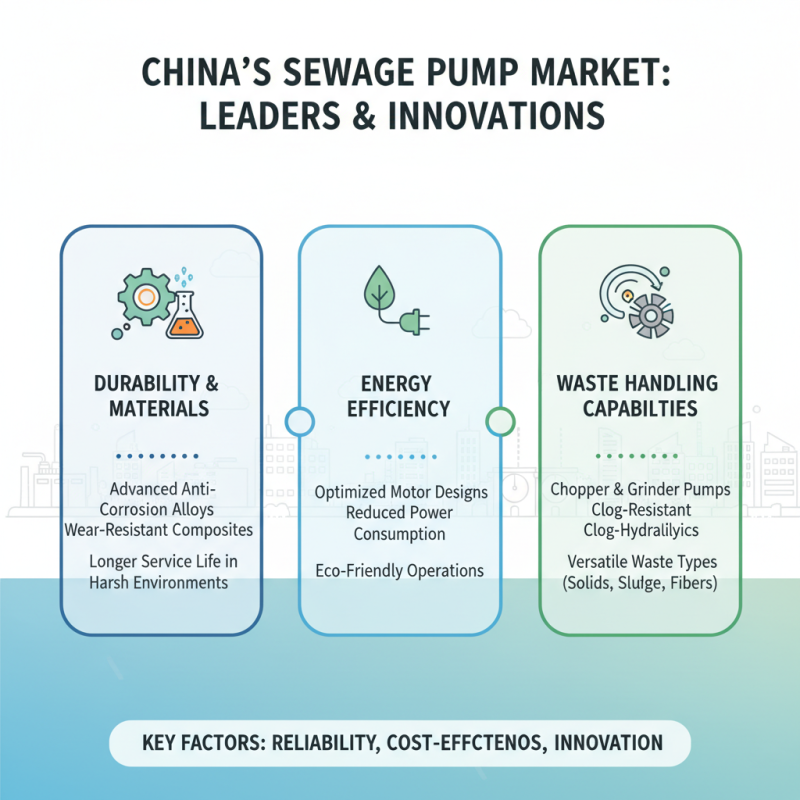
When considering sewage pumps, key features and performance metrics play a crucial role. A well-designed sewage pump should provide reliable operation in various conditions. Ideal pumps have high flow rates, allowing them to handle significant wastewater. Efficiency is essential, as it directly impacts operational costs. Energy-efficient models help mitigate expenses, making them vital for long-term usage.
Performance metrics often include durability and maintenance requirements. A robust pump can withstand harsh environments, ensuring longevity. Many pumps are designed for hassle-free maintenance, minimizing downtime. While many options are available, some models may face issues with blockages or wear over time. This highlights the need for careful assessment based on specific needs.
Another important aspect is noise levels. Quiet operation is beneficial, especially in residential areas. Pumps that operate silently can enhance user satisfaction. Yet, installation contexts may create unforeseen challenges. Pumps may not perform as expected in all scenarios. It is vital to consider these factors to make an informed choice.
Top 10 Sewage Pumps in China for Global Buyers
| Model |
Max Flow Rate (m³/h) |
Max Head (m) |
Power (kW) |
Material |
Weight (kg) |
| SP-100 |
100 |
30 |
5.5 |
Cast Iron |
150 |
| SP-200 |
150 |
25 |
7.5 |
Stainless Steel |
180 |
| SP-150 |
120 |
28 |
5.5 |
Polypropylene |
140 |
| SP-250 |
250 |
35 |
11 |
Ductile Iron |
200 |
| SP-300 |
300 |
40 |
15 |
Cast Iron |
220 |
| SP-350 |
350 |
45 |
18.5 |
Stainless Steel |
240 |
| SP-400 |
400 |
50 |
22 |
Cast Iron |
260 |
| SP-450 |
450 |
55 |
30 |
Ductile Iron |
280 |
| SP-500 |
500 |
60 |
37 |
Stainless Steel |
300 |
Market Trends and Demand for Sewage Pumps in China
The sewage pump market in China showcases significant trends that global buyers cannot overlook. According to a recent report by ResearchAndMarkets, the sewage pump sector is anticipated to grow at a CAGR of 5.2% from 2023 to 2028. This growth indicates a rising demand for efficient wastewater management solutions, driven by urbanization and industrial growth.
Emerging technologies are reshaping the sewage pump landscape. For instance, the integration of IoT in pump systems enhances real-time monitoring and predictive maintenance. Such innovations improve efficiency and reduce costs. However, the market sees challenges, including inconsistent quality standards among local manufacturers. Some products may not meet international expectations, leading to buyer hesitancy.
Tips: Always seek detailed specifications before buying. Understanding the operational environment is crucial. Ensure the pump can handle specific sewage types. Furthermore, consider the long-term maintenance requirements. Investing in a reliable pump saves future costs and time.
Market Trends and Demand for Sewage Pumps in China
Regulatory Standards and Certifications Influencing Sewage Pump Selection
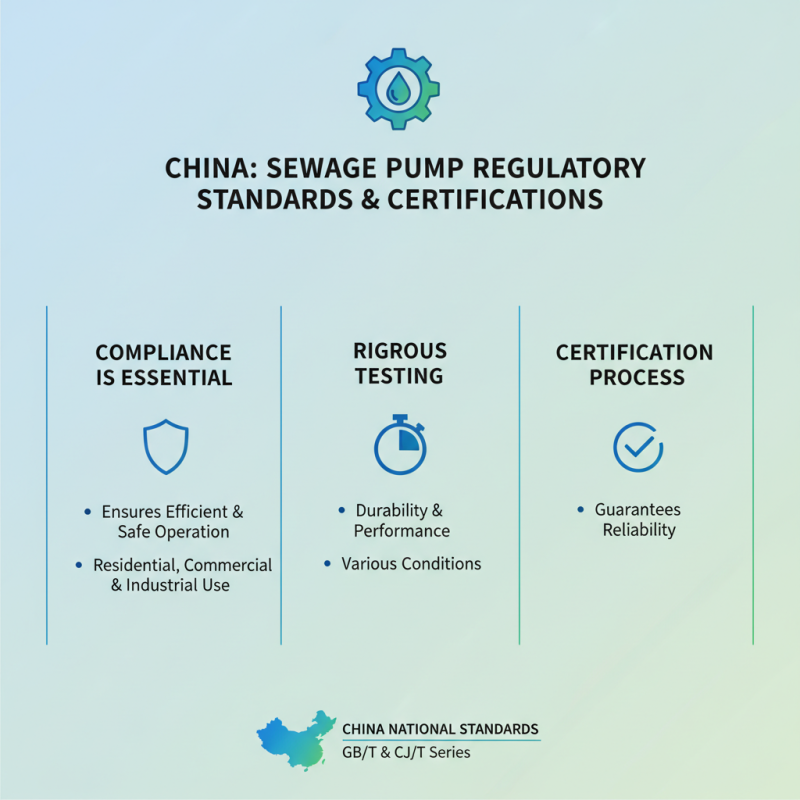
When selecting sewage pumps for projects in China, compliance with regulatory standards is essential. These standards ensure that pumps operate efficiently and safely in residential, commercial, and industrial applications. The certification process often involves rigorous testing. This guarantees the durability and performance of the pumps under various conditions.
Different regions in China may have specific regulations. For instance, the Ministry of Ecology and Environment sets necessary guidelines. It is crucial for buyers to understand local certifications before making a purchase. Common certifications include ISO and CE marks, signifying quality and safety.
Tips: Always ask for documentation when evaluating a pump. Verify if the pump meets all required standards. Also, consider regional differences in regulatory requirements. This understanding can help avoid future issues related to compliance and performance.
Buyers should ensure they stay updated on changes in laws. Sometimes, regulations can change without much notice. This can affect pump selection and use. Failing to keep up can lead to challenges later on.