Leave Your Message
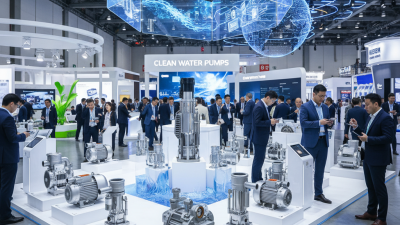
China’s water pump sector spans small workshop suppliers and large manufacturers with export networks. The difference is not always visible in a catalog photo. Buyers need to compare pump materials, test records, production capacity, and after-sales support. A polished brochure is useful, but it cannot replace a clear duty-point specification or a factory inspection.
Pump engineer Igor J. Karassik is widely respected for his technical work, but I cannot verify a reliable verbatim quotation from him on Chinese manufacturers. Rather than invent one, this introduction uses a practical principle: “Choose the pump for the system, not the sales pitch.” The line is editorial, not a quotation attributed to Karassik. That distinction matters. Trust starts with accurate claims.
This guide examines leading Chinese Water Pump manufacturers through practical criteria: product range, quality controls, customization, certifications, and service reach. It also considers how suppliers handle common applications, from building water supply to industrial circulation. A buyer should ask for performance curves and test documentation, then check whether stated conditions match the actual installation. There are gray areas, too. A low price may suit a simple project, yet become costly when parts or support are hard to obtain. No ranking can replace careful due diligence.
Who Are the Top Water Pump Manufacturers in China?
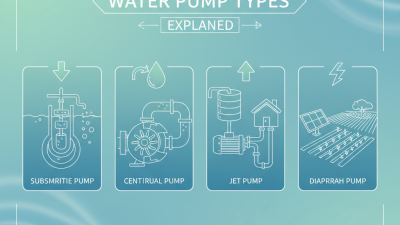
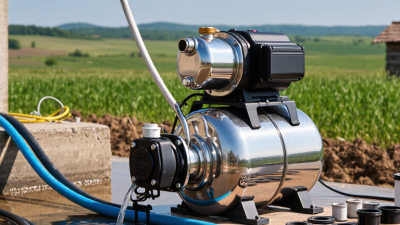
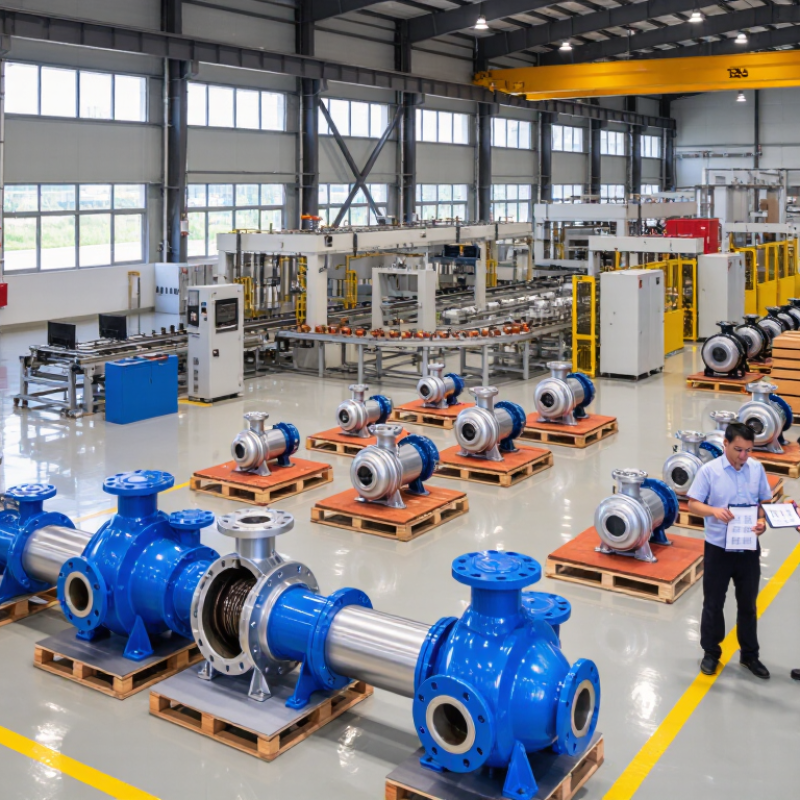
China’s water-pump industry is easier to understand by pump type and duty than by a single ranking. Horizontal centrifugal pumps move large volumes through municipal networks, factories, and irrigation lines. Submersible pumps sit below the water surface, making them practical for wells, drainage, and wastewater sumps. Multistage pumps build higher pressure for boiler feed and high-rise water supply. Axial-flow and mixed-flow designs suit low-lift, high-volume drainage and irrigation. The right choice depends on flow, head, water quality, and operating hours—not just motor power.
Application demand helps explain this spread. FAO AQUASTAT estimates that agriculture accounts for about 70% of global freshwater withdrawals, industry 19%, and municipal use 11%. These figures are global, not China-specific, but they clarify why irrigation pumps often prioritize flow and energy cost, while industrial systems may require pressure stability and materials suited to the fluid. Municipal operators also value reliable performance during peak demand. That matters. A pump selected from a catalogue alone can disappoint when sediment, pipe losses, or seasonal water levels differ from the assumptions. The division is useful, but imperfect: many projects combine pump types, and actual selection requires site data and operating conditions.
A segment-based overview of China’s pump-manufacturing landscape. It compares common pump categories, their applications, and the capabilities manufacturers typically develop for each segment.
| Pump Segment | Typical Pump Types | Common Applications | Key Design Characteristics | Typical Manufacturer Specialization | Buyer Evaluation Priorities |
|---|---|---|---|---|---|
| Municipal water supply | End-suction, split-case, and multistage centrifugal pumps | Water intake, treatment plants, distribution networks, and building water supply | Designed to move water continuously; selection depends on required flow, head, efficiency, and operating conditions. | Hydraulic design, dependable castings, motor matching, and production of pumps in a range of flow and pressure duties | Duty-point efficiency, reliability, materials, maintenance access, and compliance with project specifications |
| Agricultural irrigation and drainage | Axial-flow, mixed-flow, centrifugal, and submersible pumps | Field irrigation, canal transfer, groundwater lifting, and drainage | Axial- and mixed-flow designs suit high-flow duties; the appropriate type depends on water source, lift, and system layout. | High-volume water handling, corrosion-resistant options, and equipment suited to seasonal or outdoor operation | Flow and head match, energy use, solids tolerance where needed, ease of installation, and serviceability |
| Wastewater and sewage | Submersible sewage, non-clog, and dry-pit centrifugal pumps | Municipal wastewater, sewage lift stations, industrial effluent, and stormwater management | Configured for wet or dry installation; impeller and passage design are selected to handle the expected solids and wastewater conditions. | Sealing systems, clog-resistant hydraulics, corrosion protection, and motor protection for submerged service | Solids-handling capability, seal and motor protection, access for maintenance, and suitability for the fluid |
| Industrial process and utilities | End-suction, multistage, inline, and process centrifugal pumps | Cooling water, boiler-feed systems, circulation, general plant services, and process-fluid transfer | Materials, seals, and hydraulic configuration vary with temperature, pressure, fluid properties, and operating duty. | Material selection, shaft sealing, precision machining, and configuration for specific process conditions | Fluid compatibility, operating envelope, seal arrangement, efficiency, and availability of technical support |
| Building services and HVAC | Inline, end-suction, multistage, and booster-set pumps | Heating and cooling circulation, pressure boosting, water transfer, and building services | Often selected for compact installation, stable circulation, or maintaining pressure across a building system. | Compact assemblies, motor and control integration, low-noise operation, and packaged pressure-boosting systems | System compatibility, control options, energy consumption, noise, footprint, and maintenance requirements |
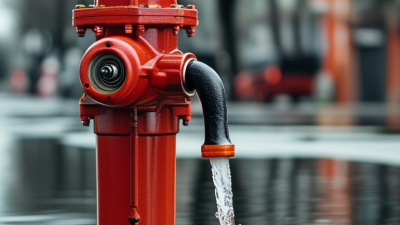
| Fire protection | Horizontal split-case, end-suction, and vertical turbine fire pumps | Fire-protection water supply for industrial, commercial, and infrastructure projects | Selected as part of a fire-pump system to deliver specified flow and pressure when required. | System-level assembly, dependable drivers and controls, testing, and documentation for project approval | Applicable local codes and approvals, rated duty, system configuration, testing records, and service support |
| Chemical dosing and fluid metering | Diaphragm metering and other positive-displacement dosing pumps | Water treatment, chemical injection, process dosing, and controlled fluid transfer | Positive-displacement operation supports controlled delivery; wetted materials must suit the chemical and service conditions. | Metering accuracy, chemical-resistant wetted parts, adjustment or control features, and leak management | Required dosing range, repeatability, chemical compatibility, control interface, and maintenance needs |
| Groundwater, wells, and dewatering | Submersible well, vertical turbine, and dewatering pumps | Deep-well water supply, construction-site dewatering, mines, and drainage applications | Designed for submerged or vertical installation; pump stages and materials are chosen for the required lift and water conditions. | Compact submersible motors, long-shaft or vertical assemblies, abrasion resistance, and reliable cable and seal arrangements | Well or sump dimensions, lift, water quality, solids content, motor protection, and installation requirements |
How to read this table: It maps the industry by product segment and application rather than ranking individual manufacturers. The table contains no company or brand names and does not claim market-share or production-volume rankings; actual specifications and compliance requirements vary by project and destination market.