Choosing a centrifugal pump is not a catalog exercise. The right design depends on the duty point, fluid, installation, and maintenance plan. A unit that performs well with clean water may struggle with abrasive solids, high viscosity, or limited suction pressure. Small details matter. A clogged strainer, a long suction line, or a mismatched impeller can change performance in the field.
This guide compares end-suction, split-case, multistage, vertical turbine, and submersible centrifugal pump designs for global buyers. It explains where each type fits and what to check before requesting a quotation. Pump specialist Lev Nelik, author of Centrifugal and Rotary Pumps: Fundamentals with Applications, has written extensively about pump operation and selection. In paraphrase, his practical message is: “Choose for the system’s real duty, not just the pump’s headline rating.” That distinction is easy to miss.
Buyers should compare required flow and head, fluid properties, materials, seal options, motor compatibility, and available service support. Verify the operating point against the pump curve, and review NPSH requirements alongside site conditions. Regional voltage, documentation, and delivery expectations also affect a sound purchase. A low purchase price can look attractive. It may not reflect the cost of downtime, spare parts, or energy use. Even a careful selection has limits; actual performance depends on installation and operation. Use this overview to narrow the options, then confirm the final specification with a qualified pump engineer and the manufacturer.
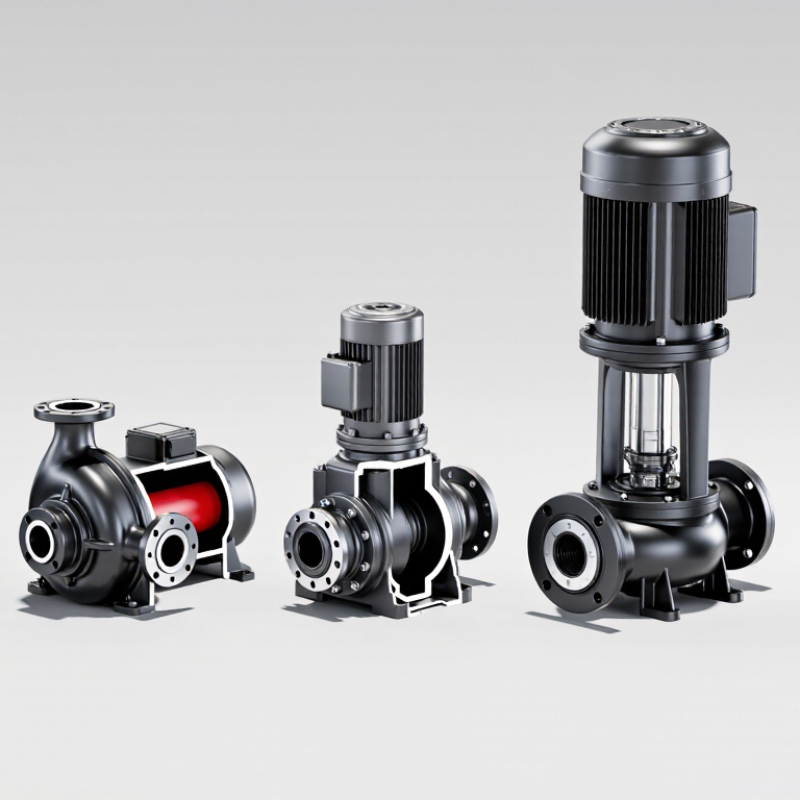
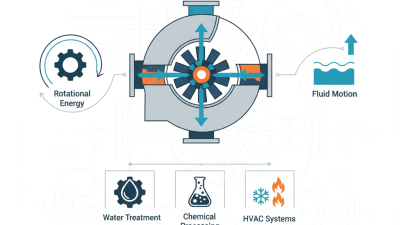
For global buyers in 2026, centrifugal pump selection starts with four basics: impeller, volute, flow, and head. A centrifugal pump converts motor energy into liquid movement. The rotating impeller accelerates the liquid outward. The volute then slows and guides that liquid toward the discharge nozzle. That shape matters. Poor matching can create vibration, noise, and unstable operation.
Flow is the liquid volume delivered over time, usually measured in cubic meters per hour. Head is the energy needed to lift and move the liquid, including pipe friction. A pump may provide high flow but insufficient head. End-suction pumps suit many general duties. Multistage pumps create higher head through several impellers. Vertical pumps can serve deep wells or tanks, but installation alignment becomes critical.
Small details often decide performance. During commissioning, operators should compare actual flow, pressure, motor current, and vibration with the selection data. I have seen systems fail because buyers checked only the discharge size. That assumption is risky. Impeller diameter, liquid temperature, viscosity, and suction conditions also affect the duty point. NPSH deserves careful attention, especially with hot liquids or long suction lines. Calculations are never perfect. Field measurements may expose them. Reliable purchasing requires a verified pump curve, clear material specifications, maintainable seals, and realistic operating conditions.
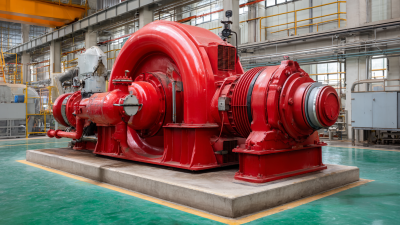
2026 Best Centrifugal Pump Types for Global Buyers
Selecting a centrifugal pump starts with the duty point, not the catalog photograph. Flow, head, fluid temperature, solids, and operating hours shape the decision. End-suction pumps suit many general water duties, especially where installation space and cost matter. Their simple layout can reduce maintenance time, but suction conditions still require careful checking.
Split-case pumps handle larger flows with balanced casing support. They are practical for municipal networks, cooling systems, and industrial circulation. Their horizontal access can simplify inspection, although alignment and foundation quality remain important. Multistage pumps build higher pressure through several impellers. They fit boiler feed, pressure boosting, and tall-building systems. However, each added stage increases sensitivity to contamination, seal wear, and hydraulic imbalance.
Vertical pumps work well where floor space is limited or tanks require direct suction. Vertical turbine arrangements can also serve deep water sources, but shaft length demands accurate installation. In field projects, I have seen an attractive efficiency figure become disappointing when the pump operated far from its best efficiency point. A neat datasheet can mislead. Buyers should request certified performance curves, material details, factory test records, and spare-parts information. Check local electrical requirements and service capability before ordering. Small details matter. Impeller clearance, seal selection, and standby capacity deserve written review. When the fluid changes seasonally, the selected type may need rechecking rather than automatic acceptance.
2026 Best Centrifugal Pump Types for Global Buyers
Efficiency Benchmarks: EU MEI ≥0.40 and ISO 9906 Acceptance Grades
For 2026 purchasing, efficiency starts with the duty point, not the catalogue headline. The European Commission’s Ecodesign Regulation (EU) 2019/1781 sets a Minimum Efficiency Index of at least 0.40 for covered clean-water pumps. This benchmark applies to hydraulic performance under defined test conditions. It does not guarantee efficient operation in every installation. A pump running far left of its best efficiency point can waste energy, even when its certificate looks excellent.
ISO 9906:2012 provides a practical acceptance framework for factory testing. Grade 1 offers tighter measurement tolerances, while Grade 2 is commonly used for commercial verification. Grade 3 allows wider variation and may suit less critical services. Buyers should request the selected grade, test medium, speed, flow, head, and power readings. Otherwise, comparison becomes uncertain. Small details matter.
Field experience exposes the weak spot. A pump may meet MEI ≥0.40 at 50 Hz, yet perform poorly with an oversized impeller, blocked suction strainer, or unstable control valve. The European Commission’s ecodesign documentation links pump efficiency with substantial lifecycle energy use, but operating conditions remain decisive. I would specify ISO 9906 acceptance testing at the actual duty point, then check vibration and absorbed power after commissioning. Perfect paperwork is not field evidence. That distinction is easy to miss.
| Centrifugal Pump Type | Typical Duty Range | Typical Hydraulic Efficiency at Best Efficiency Point | Recommended Applications | EU MEI ≥0.40 Consideration | ISO 9906 Acceptance Grade for Procurement | Key Selection Criteria |
|---|---|---|---|---|---|---|
| End-Suction Close-Coupled Pump | Flow: approximately 5–500 m³/h Head: approximately 10–100 m |
55–82%, depending on size, speed, impeller design and duty point | Building services, irrigation, general water transfer, light industrial circulation and process water | Target ≥0.40 where in scope Confirm the applicable EU Ecodesign product category and the declared MEI value for the selected model. |
Grade 2 is commonly suitable for standard factory performance verification; use Grade 1 when tighter contractual accuracy is required. | Duty-point stability, motor efficiency, seal material, NPSH margin, spare-part availability and ease of installation |
| End-Suction Frame-Mounted Pump | Flow: approximately 10–2,000 m³/h Head: approximately 15–160 m |
65–88% for medium and large correctly selected units | Municipal water supply, HVAC, industrial utilities, cooling-water systems and agricultural irrigation | Target ≥0.40 where in scope Evaluate efficiency at the specified duty point rather than relying only on the maximum catalog value. |
Grade 2 for routine acceptance; Grade 1 for critical water infrastructure or performance-guarantee contracts. | Baseplate alignment, coupling and guard, bearing life, operating range, vibration limits and lifecycle energy cost |
| Horizontal Split-Case Pump | Flow: approximately 100–10,000 m³/h Head: approximately 20–250 m |
75–92% at medium-to-high flow rates when properly sized | Large waterworks, fire-water systems, district cooling, power utilities and high-flow transfer duties | Often favorable for MEI-oriented designs Check whether the specific pump configuration falls within the applicable EU requirements; large or special-purpose units may have different scope conditions. |
Grade 1 for major infrastructure projects; Grade 2 for normal commercial acceptance testing. | High-flow efficiency, rotor balance, shaft stiffness, split-casing maintenance access, minimum flow and long-term reliability |
| Vertical Inline Pump | Flow: approximately 2–600 m³/h Head: approximately 5–160 m |
50–85%, depending on hydraulic size, number of stages and motor configuration | HVAC circulation, chilled-water systems, heating loops, pressure boosting and compact mechanical rooms | Verify product scope Integrated motor-and-pump designs may be assessed under different requirements; obtain the declared efficiency and MEI documentation. |
Grade 2 is generally appropriate; Grade 1 may be specified for guaranteed system performance. | Pipe-load limitations, alignment, motor cooling, variable-speed control, seal replacement and low-load operating behavior |
| Multistage Ring-Section or Barrel Pump | Flow: approximately 1–500 m³/h Head: approximately 50–1,000 m |
60–88%, with efficiency varying significantly by stage count and operating point | Boiler feed, high-pressure water supply, reverse-osmosis pretreatment, wash-down systems and pressure boosting | Application-dependent Confirm whether the complete pump falls within the applicable EU water-pump requirements and compare the declared MEI at the rated point. |
Grade 1 for high-pressure or energy-intensive services; Grade 2 for general industrial procurement. | Pressure rating, stage balance, axial thrust management, NPSH available, seal system, material compatibility and turndown range |
| Vertical Turbine Pump | Flow: approximately 50–20,000 m³/h Head: approximately 20–300 m |
70–90% for properly designed bowl assemblies at the best efficiency point | Raw-water intake, irrigation, flood control, cooling-water intake and deep-well pumping | Scope must be confirmed Submerged bowl assemblies, column assemblies and driver arrangements can affect regulatory applicability and the reported efficiency basis. |
Grade 1 is recommended for large civil, irrigation and intake projects; Grade 2 is suitable for less critical duties. | Submergence, well hydraulics, shaft line design, column losses, vibration, driver selection and installation tolerances |
| Submersible Centrifugal Pump | Flow: approximately 5–5,000 m³/h Head: approximately 5–150 m |
45–85%, including hydraulic efficiency; total wire-to-water efficiency is lower after motor and control losses | Wastewater lifting, drainage, dewatering, stormwater, sewage and borehole water supply | Often outside simple MEI comparison Wastewater, sewage and submersible configurations may be excluded or treated differently; verify the exact legal scope before comparing MEI values. |
Grade 2 for normal hydraulic testing; specify Grade 1 for critical drainage, flood-control or municipal projects. | Free passage, solids handling, cable protection, motor cooling, seal leakage monitoring, corrosion resistance and service access |
| Self-Priming Centrifugal Pump | Flow: approximately 5–1,000 m³/h Head: approximately 10–100 m |
45–78%, generally lower than equivalent non-self-priming designs | Drainage, wastewater transfer, construction dewatering, tanker loading and applications with intermittent air entrainment | Verify applicability Self-priming and solids-handling characteristics may place the pump outside a direct clean-water MEI comparison. |
Grade 2 is normally adequate; use Grade 1 when guaranteed flow, head and priming time are contract requirements. | Priming time, suction lift, air-handling capability, solids passage, check-valve design, wear resistance and dry-running protection |
Choosing a centrifugal pump starts with duty, not catalog preference. End-suction pumps suit moderate flow and head in compact systems. Split-case pumps handle higher flows with balanced hydraulic loading. Multistage pumps build high pressure efficiently, while vertical turbine pumps fit deep wells and sumps.
Write down the actual flow range first. Then check total dynamic head, including pipe friction, elevation, valves, and pressure requirements. A pump operating far left on its curve may overheat and vibrate. Too far right can overload the motor. In field commissioning, I have seen clean calculations fail because a partially closed valve changed the real duty.
NPSH deserves careful attention. Compare NPSH available at the site with NPSH required by the pump, leaving a practical margin. Hot water, long suction lines, clogged strainers, and high-altitude sites reduce that margin. Keep suction piping short and avoid unnecessary elbows. Small details matter.
Frequency also changes pump behavior. A four-pole motor runs near 1,500 rpm at 50 Hz and 1,800 rpm at 60 Hz, before slip. The higher speed can increase flow, head, power demand, and wear. A motor designed for 50 Hz may not deliver the same duty on a 60-Hz supply. Verify voltage, motor frequency, impeller diameter, and control method together. Variable-frequency drives add flexibility, but they cannot repair an undersized suction system. That shortcut sometimes works. Until it does not.
For global buyers, API 610 compliance should be checked beyond a certificate. Confirm the pump’s duty point, NPSH margin, vibration limits, rotor balance, and inspection records. API 610 is designed for demanding petroleum, petrochemical, and natural gas services. However, not every API 610 pump suits every process. A seawater unit needs corrosion-resistant alloys, while sour service may require materials aligned with NACE MR0175/ISO 15156. Material certificates should match wetted parts, not only the casing.
Energy deserves equal attention. The U.S. Department of Energy’s Improving Pumping System Performance sourcebook reports that pumping systems may consume 25–50% of industrial facility electricity. A small efficiency loss becomes expensive across continuous operation. Ask for verified efficiency at the actual operating point, not only the best-efficiency point. Impeller trimming can help. It can also reduce future flexibility.
Seal selection should follow pressure, temperature, solids, emissions, and dry-running risks. Review API 682 seal-plan compatibility, flush quality, and spare availability. Cartridge seals may shorten maintenance time, but they are not maintenance-free. Serviceability is often overlooked. Check lifting points, coupling access, bearing replacement steps, alignment tolerances, and local technician support. The Hydraulic Institute’s pump guidance repeatedly emphasizes system-based selection, yet buyers still compare catalog efficiency alone. That is an avoidable weakness. No datasheet is perfect. Request performance curves, test tolerances, material traceability, and a realistic five-year spare-parts plan before purchase.